



In 2025, several key digital and technological trends are expected to shape industries and society.
You may find opportunities in leveraging AI for automation, building XR experiences, or addressing new regulatory compliance needs.
Staying ahead of these trends can help position your organisation strategically in this evolving landscape.
Continue reading or download a PDF version with extra inclusions. You can also view the 2026 Digital Forecast for the latest trends in technology.
From assistants to augmentation with AI

Artificial intelligence (AI) has evolved from a science fiction concept into an essential part of everyday life. By 2025, AI will move beyond basic automation, becoming deeply integrated into our routines. At its core, AI focuses on developing computer systems capable of performing tasks once thought to require human intelligence. We can expect advanced personal AI assistants that anticipate our needs and simplify daily tasks. Similarly, customer service will be revolutionised, with AI-driven chatbots offering personalised and efficient support that rivals human interaction.
Impact
- AI will automate repetitive organisational tasks
- Decisions and processes will be optimised
- CX interactions will be personalised
Flexibility and collaboration will be embraced in workplaces

The COVID-19 pandemic has profoundly changed how we work. By 2025, remote and hybrid work models are expected to dominate. Technology will be essential for enabling collaboration and communication among teams spread across different locations. Furthermore, automation will keep reshaping the job market, driving the demand for new skills and emphasising the importance of lifelong learning.
Impact
- Work-life balance will be flexible with remote and hybrid work models
- Maintaining a strong culture in companies is essential
Intent-driven consumer technology

Consumer technology will focus on understanding and responding to user intent rather than merely reacting to inputs. AI and machine learning advances will allow systems to anticipate needs, provide hyper-relevant recommendations, and make proactive suggestions. Intent-driven technology will integrate across devices. Interactions will become deeply personalised, from voice assistants that act as genuine personal agents to e-commerce platforms that predict shopping preferences. Businesses that adopt intent-driven technology will gain a competitive edge, improving customer satisfaction and loyalty.
Impact
- There will be a race to deliver hyper-targeted content and services
- Intent-driven systems will provide cohesive experiences across multiple devices and platforms
- Robust policies will be needed to address privacy concerns while leveraging intent data
The way we are searching is changing

Search behaviour is evolving rapidly, driven by the rise of AI-powered search, voice assistants, and visual search technologies. Consumers will expect search experiences to be intuitive, conversational, and highly contextual. Traditional keyword-based search gives way to queries in everyday human language and image-based searches, where users can find what they need simply by describing or showing it. AI advancements are also enabling predictive and intent-based results, where systems deliver answers before the user even asks the question.
Impact
- Search will understand complex queries via natural language processing
- Images and voice will be used for search, creating new optimisation challenges for businesses
- AI-driven tools will pre-emptively provide results, reshaping how we interact with search
Hyper-personalisation and the era of ‘me’ experiences
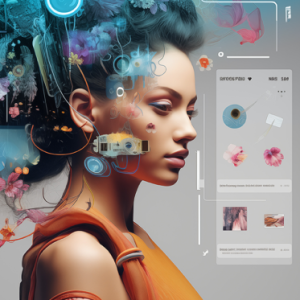
Hyper-personalisation will redefine how businesses interact with their customers. Companies can deliver tailored experiences beyond demographics to consider individual preferences, behaviours, and real-time contexts using advanced data analytics, AI, and machine learning. From custom product recommendations to personalised marketing messages, hyper-personalisation fosters deeper connections between brands and their audiences. This trend extends to industries like healthcare, where treatments can be tailored to a patient’s genetic profile, or retail, where dynamic pricing and promotions adjust to individual shopping habits.
Impact
- Tailored content, personalised recommendations and individualised experiences
- Adapt in real-time to what users should be doing
- Gain a competitive advantage as true customer-first innovators
Voice and conversational AI will dominate

Voice and conversational AI will dominate how people interact with technology, shaping the future of communication, commerce, and customer service. These systems are becoming more intuitive, allowing users to engage in natural, human-like conversations with devices, apps, and services. Voice interfaces will expand beyond smart speakers and phones, integrating into cars, wearables, and even public spaces. This shift will transform industries, enabling personalised and proactive interactions that align with user preferences and needs.
Impact
- Engage naturally to reduce interface complexity and lengthy learning curves
- Streamline support with instant, personalised responses
- Deliver quick, intuitive access to information, services, and support
You need proactive and predictive CX

Customer experience (CX) will be defined by businesses’ ability to anticipate and address customer needs before they even arise. Proactive CX uses advanced analytics and AI to identify potential issues and opportunities, ensuring seamless interactions at every touchpoint. Predictive CX takes this further, leveraging data to foresee customer behaviours and preferences, allowing for hyper-personalised solutions and offers. Together, these approaches reduce friction, enhance satisfaction, and increase loyalty by making customers feel understood and valued, setting a new standard for excellence.
Impact
- Enhanced customer satisfaction, loyalty, and retention
- Insights to optimise resource and budget allocations
Tap into AI-powered emotional intelligence
AI-powered emotional intelligence (EI) will redefine human-machine interactions, enabling technology to recognise, interpret, and respond to human emotions. By analysing voice tone, facial expressions, and text sentiment, emotionally intelligent AI will deliver more empathetic and tailored responses. This capability transforms customer service, where AI can adapt its tone and approach based on a user’s mood, creating more satisfying and effective interactions. AI with EI also enhances employee well-being by detecting stress or disengagement and offering timely support.
Impact
- Customer service and support will become more empathetic and adaptable
- Ei-powered employee support systems will gain traction
- Requirements for robust governance will tighten, to ensure transparency, consent, and trust
Human touch and critical thinking in a tech-driven world

As technology evolves, critical thinking emerges as a non-negotiable skill in navigating a world flooded with information. The ability to distinguish fact from fiction, uncover biases, and assess the implications of innovations is essential for informed decision-making. Similarly, while digital tools enhance communication, they cannot replicate the depth of face-to-face human connections—prioritising meaningful, real-world relationships remains vital. Technology serves as both an enabler and a challenge at the intersection of creativity and innovation.
Impact
- Critical thinking and human judgment are vital for nuanced, ethical decisions beyond technology’s reach
- Human values ensure that technology is designed to solve real-world problems while prioritising empathy, inclusivity, and user well-being
- Balanced collaboration will blend intuition with machine efficiency
Extending reality – blending the physical and digital worlds
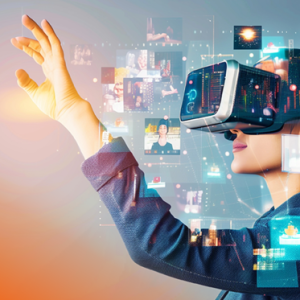
Extended reality (XR), which includes augmented reality (AR) and virtual reality (VR), represents cutting-edge technologies that merge the physical and digital worlds. AR enhances the real world by overlaying digital content, while VR immerses users in completely virtual environments. By 2025, XR is expected to move beyond niche uses and achieve widespread adoption. Picture experiencing a live concert from home through VR or using AR overlays to access interactive training manuals in a manufacturing setting.
Impact
- Interactive and immersive experiences that enhance decision-making
- Build stronger emotional connections to products and services
- Redefine how businesses attract, retain, and delight
Download the 2025 Digital Forecast Report (PDF, 1.46mb)
Stay updated with the latest digital insights and trends by subscribing to our email newsletter.